Den v životě Abeda Salamy

Anatomie jedné jeruzalémské tragédie

A Day in the Life of Abed Salama. Anatomy of a Jerusalem Tragedy. In 2012, a bus carrying children from an Arab kindergarten crashed in the occupied part of Jerusalem. Six of them burned to death, one teacher also died, and many were injured. The author mapped in detail the immediate circumstances of the accident, the specific lives of the actors and relatives of the children, as well as the broader historical and socio-political context, especially the very difficult living conditions of Palestinians under Israeli occupation, conditions of segregation and all kinds of bureaucratic restrictions, the situation of permanent conflict and mutual hatred. The book won the PULITZER PRIZE for nonfiction in 2024.

Smrt dokonalé věty

The Death of a Perfect Sentence. The novel depicts Estonia’s final months under Soviet rule and offers a multifaceted and vivid picture of the days leading up to Estonian independence. It explores a time of fear and uncertainty, but also of hope and courage, when the forces of independence clashed with the USSR’s last-ditch efforts to preserve the old order. The novel features a group of young dissidents who devise a plan to smuggle copies of secret KGB files out of the country, but they are also helped by a Russian teacher and a young art student who gets involved in dissident activities almost by accident. The characters include KGB agents from both Russia and Estonia, as well as older Estonians who are content with the status quo.

Радзіна (Kinship)

book in Belarusian language

Zbych Slupoŭsky

The novel’s characters are part of multiple generations that go through upheavals and catastrophes throughout history: Revolution, collectivisation, war, collaboration, the Holocaust, moving out of the villages into the cities, the fall of communism, and so on. Not only one’s own life is determined by which side one finds oneself on at the next break in history, but also that of the following generations. Again and again, the fronts run right through families and communities, as in fact was and is the case in Belarus.

Montana

Montana. This suspenseful novel with elements of a thriller by a young Moldovan writer is set in his native Transnistria. It captures the grim reality of post-Soviet Moldova, mainly through the eyes of a child: poverty and life “behind the wall” in a railway cars converted into dwellings. Part of this reality is the civil war of the early 1990s and the emergence of the pro-Russian “Transnistrian Republic.”

Mama Odessa

Maxim Biller


Mother Odessa. In addition to its literary qualities, the novel Mama Odessa presents a view of the turbulent fate of Jews in the 20th century. It tells the story of a Russian-Jewish family from Odessa and artfully connects different time periods: Odessa during World War II, including the massacre of Odessa’s Jews in 1941, the late Stalinist period when the KGB persecuted the narrator’s father, emigration, and the present.

Sfumato

Sfumato. Welcome to Russia 2032. There is peace in the world. Russia, Europe, the United States and China signed a convention ten years ago that completely ruled out a nuclear war of aggression. Tired of the Kremlin‘s aggression, the world community reached an agreement with Russia: in exchange for its own security, the West no longer cares how the Russian government treats its citizens under its isolated power and only occasionally checks whether foreign policy agreements are respected. Human rights or repression within Russia are considered to be their internal affair. Russia is fenced and the borders are closed. America is no longer the enemy, the rhetoric has changed completely…

Pakt

Stalin, Hitler a příběh jedné vražedné aliance 1939–1941

Claudia Weber


The Pact. Stalin, Hitler and the Story of a Murderous Alliance 1939–1941. Hitler’s alliance with Stalin, known as the Molotov–Ribbentrop Pact, was not only a temporary armstice between the two totalitarian world powers but practically enabled the Nazi Germany to start the World War II by attacking Poland and simultaneously enabled the Stalinist Soviet Union to occupy the Baltic states and after the war with Finland a part of its territory, too. Thus during the first twenty-two months of the World War II the collaboration of the two dictators changed the political situation on the whole continent fundamentally.

Říkali mi Gojele

aneb židovská dobrodružství křesťanského chlapce, když skončilo šoa

Karl von Wetzky


They called me Gojele. The Jewish adventures of a Christian boy after the end of Shoah. This partly autobiographical novel by Czech-German writer Karl von Wetzky takes place shortly after the Second World War. Twelve years old Heinrich Adolf and his mother are about to be deported to Germany, so they set off for a centre in northern Moravia that gathers Germans from the Bohemia for resettlement. However, by coincidence and due to a clerical error, they arrive in a small town where the surviving Jews are concentrated, preparing for their journey to Palestine.

Zástava dechu

Lucie Koudelková Jesenská


Respiratory arrest. The novel resonates in a colourful and multi-layered way with the contemporary societal theme of how to be a good mother. The whirlwind of events during a single day in the life of a mother of two young children, between tender moments of parental love, heated conflicts and sheer exhaustion, are accompanied by metaphors and images of a time when women walked the world with bared breasts and drank water from springs, in short, of a time when a child’s mother was an entire community, long before plastic jungles and playgrounds.

Neutečeš

Lukáš Hrdlička


You won’t get away. In the Christmas time, two boys hanging out in Prague’s Anděl district have their lives changed when a quick burglary turns into a terrifying encounter with an organised drug trafficking group. At the same time, a new client comes to private detective Kob – she wants to track down her son at any cost.

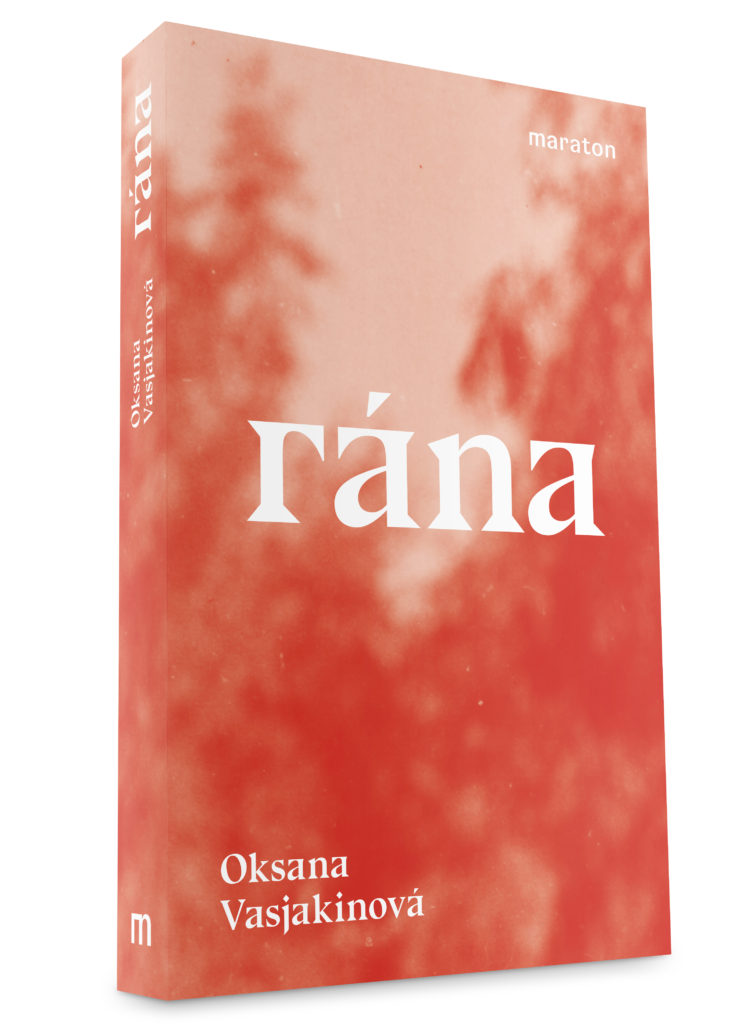
Step

Oksana Vasyakina


The Steppe. In the hot summer of 2010, when the European part of Russia was engulfed by fires, a 20-year-old girl arrives from Siberia to meet her father, whom she hasn’t seen for ten years. Together they set off on a long journey in his truck and their destination is the untamed steppe in the south of the country. The father, who considers this inhospitable expanse his home and only possession, would like to share it with his grown daughter. However, the taiga-born girl is rather frightened by the open landscape and finds it strange.

Věk Rudých Mravenců

Tanya Pyankova

The Age of Red Ants. This title is the fourth novel of Taňa Pjankova. It tells a story about the so-called Holodomor period, i.e. Ukrainian famine, that took place between 1932 and 1933. The story follows three main characters – Dusya, Svyryd and Solya – whose fates are the result of almost three years of studying archival materials. As the author herself states, they are not fictitious characters. In addition to this three storylines, the author also handles the contrast between the dying traditional village and the Soviet system, interestingly working with the embodiment of Hunger as an allegorical figure.

Begin typing your search term above and press enter to search. Press ESC to cancel.

Back To Top